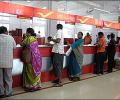
The staff at post offices misappropriated Rs 95.62 crore of public money between November 2002 and September 2021, the Comptroller and Auditor General has said. The money may seem small but it is what common citizen invested in post office savings, the oldest and the largest banking system in the country. The system serves the investment needs of urban and rural clients through schemes such as savings bank, recurring deposits, time deposits, national savings certificates, kisan vikas patras, public provident fund, monthly income account scheme, sukanya samriddhi accounts and senior citizens savings scheme.
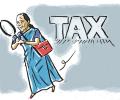
Income-tax payers fear they will receive notices from the government because the annual information statement (AIS) provided by the I-T department in many cases is showing incomes in excess of their earnings. The Central Board of Direct Taxes (CBDT) has dismissed these fears as unfounded. The deadline for filing income-tax returns (ITRs) for the assessment year 2022-23 ended on July 31.

The impact of fiscal measures announced by the government to contain inflation will be seen in the next few months because of the base effect, reports Indivjal Dhasmana.

In an unprecedented action, Indian aviation regulator DGCA has directed low-cost airline Spicejet to operate only 50 per cent of its flights for eight weeks. This follows an unusually high number of incidents involving the airline, raising safety concerns. The curtailment of capacity is unlikely to have any commercial impact on the airline owned by entrepreneur Ajay Singh. SpiceJet already operates less than 50 per cent of the flights it had filed for the summer schedule.

Tata group-owned AirAsia India's inability to get approval for international flights is hurting UDAN, the Indian government's regional air connectivity project that also aims to link cities in Northeast India and Odisha to places abroad. Sources said the civil aviation ministry is waiting for the low-cost airline to come under the full ownership of Tata Sons and become part of Air India, the former state-owned carrier now owned by the private conglomerate, before allowing it to operate international flights. Tata owns 84 per cent stake in AirAsia India and it is understood that the group will complete the process of buying rest of the stake by July's end.

Failure to reinstate salary even two years after the drastic cuts has landed the airline industry in a massive industrial relation crisis. While employees of Air India had organised a strike back in 2011, it is for the first time that private airlines are facing serious stress related to workers. IndiGo witnessed two of them, back to back. In the first instance, around 50 per cent of the IndiGo flights were delayed as a large number of crew members went on mass sick leave, apparently to participate in a rival airline's walk-in job interview.

Moody's Investors Service has warned that India, along with the Philippines, Thailand, and Vietnam are highly vulnerable to volatile food and energy prices in the Asia-Pacific region as the Russia-Ukraine conflict continues to disrupt supplies and raise the cost of agricultural products, especially cereals and vegetable oils, as well as fertilizers and other agricultural inputs. This is so because these countries have a higher weighting of energy and food prices in their consumer price index (CPI) baskets, Moody's said in its report released on Tuesday. The weighting of energy and food in overall Indian CPI stands at over 55 per cent.

Jet Airways is looking to lease around 20 Airbus A320 aircraft from lessors by 2024 as it aims to restart operations and fly international routes in the next one-and-a-half years. Jet's A320 aircraft fleet, according to sources, will be a mix of the Ceo and the more fuel-efficient Neo variants. These planes were originally intended for Russian airlines but could not be delivered following western sanctions on Russia over its Ukraine invasion.

More than 1,600 employees of Air India, the former state-run carrier now owned by the Tata group, have opted for voluntary retirement under a scheme announced on June 1. These employees comprise 22 per cent of permanent staff (around 7,000). The airline has a total employee strength of around 10,800, including those on contract.
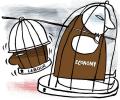
The Union government will take a bit longer to introduce the much-awaited labour codes even as the majority of states and Union Territories (UTs) have framed rules on them. There were speculations that these would be introduced from July 1. While 30 states and UTs have framed rules on the code on wages, 25 of them have done so on industrial relations. Of the two remaining codes, 24 states and UTs have framed rules on social security and 23 on occupational safety, health, and working conditions (OSH), sources said.

Even as Union ministers allay misgivings over Agnipath, figures show a meagre 2.4 per cent of the ex-servicemen who applied for a government job could get one as the Centre and the states have been unable to recruit against the reserved quotas. Public sector undertakings (PSUs), ministries, and officials of Sainik Boards have blamed it on the lack of skill among ex-servicemen. They say veterans' inability to qualify in selection exams is one of reasons for this. Also, non-recognition of qualifications obtained from the military are reasons why their recruitment has remained significantly low, pushing them towards low-skill jobs.

'We should have calmed down the child. We will do an internal analysis on that.'

An opportunity to enter a burgeoning sector at a low valuation and favourable policies are propelling some of India's largest corporate groups to scoop up drone start-ups. "Indian corporations lost the race in aerospace and space tech. "No one wants to miss the bus this time. "These are seasoned businessmen and they realise that the market cap of tech companies with problem-solving capabilities will exponentially rise in future," says Vipul Singh, CEO of Aarav Unmanned Systems (AUS).

The government expects indirect tax collection to be lower than the Budget Estimate (BE) of Rs 13.38 trillion this fiscal year, despite prospects of netting goods and services tax (GST) in large amounts, Revenue Secretary Tarun Bajaj has said. "Indirect tax collection may see lower realisation than budgeted on account of cuts in excise and customs duties. "We could see a shortfall of about Rs 1.5 trillion on account of those," he told Business Standard.

Tata-owned Air India has launched a Voluntary Retirement Scheme (VRS) for its employees- in the airline's first drive to reduce headcount. The salt-to-steel conglomerate acquired the carrier last year. As of November 2019, the airline had 9,426 permanent employees.

Hundreds of pilots are staring at a long wait to get the job of their dreams after completing the course, the cost of which runs to Rs 1 crore.
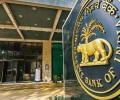
With inflation remaining at elevated levels, central banks around the world, including the Reserve Bank of India (RBI), will kill excess demand in economy over the next six to eight months, sources in the know said. They also indicated that there could be a rate hike in June, when the inflation forecast for the current financial year would be raised. The RBI, the sources said, might announce more steps such as raising the limit on held-to-maturity (HTM) bonds to support government borrowings but might not come out with any further quantitative easing GSAP (Government Securities Acquisition Programme) measures.

'Our competitiveness with China is very important.' 'If the exchange rate depreciates, it is good for us because it helps in our competitiveness.'

American automaker Ford on Thursday said that it had withdrawn plans to manufacture electric vehicles (EVs) in India and it won't invest in the country under the performance-linked incentive (PLI) scheme. "After careful review, we have decided to no longer pursue EV manufacturing for exports from any of the Indian plants. "We remain grateful to the government for approving our proposal under the PLI and for being supportive while we continued our exploration. "Ford India's previously announced business restructuring continues as planned, including exploring other alternatives for our manufacturing facilities.

Maruti's strategy for the SUV segment is to arrest the decline in customers for entry level hatchbacks.
